Brisbane’s summer heat puts a fair bit of pressure on rental properties. Air conditioners run for hours, fridges work harder to stay cold, and fans are often left running throughout the day. When several appliances are drawing power at once, an electrical fault that has gone unnoticed for months can suddenly become a problem.
A safety switch that will not trip, a power point that feels warm or a circuit that keeps cutting out might seem like a minor inconvenience. It is worth taking these signs seriously, particularly before the hottest part of the year arrives.
For landlords and property managers, an inspection before the first heatwave is far more useful than arranging repairs after a tenant reports a problem late at night. Tenants also have a part to play by knowing what to look for and reporting faults as soon as they appear.
Here are the electrical checks worth organising before summer, along with a few practical ways to keep a record of the work.
Key insight: Safety switches, overloaded power points and ageing switchboards deserve attention before Brisbane’s summer temperatures arrive. Finding a fault early can help avoid an emergency repair when the property is already under pressure.
Test the safety switches every three months
Safety switches, also known as residual current devices (RCDs), help protect people from electric shock by cutting the power when they detect current leaking from a circuit. They work quickly, but they still need to be tested to make sure they operate correctly.
A simple check is to use the test button on each safety switch at the interval specified by the manufacturer. For many domestic installations, this is every three months. The power should switch off when the button is pressed.
If a safety switch fails to trip, will not reset or keeps switching off without an obvious reason, arrange for a licensed electrician to investigate. Do not keep resetting it and hope the problem goes away.
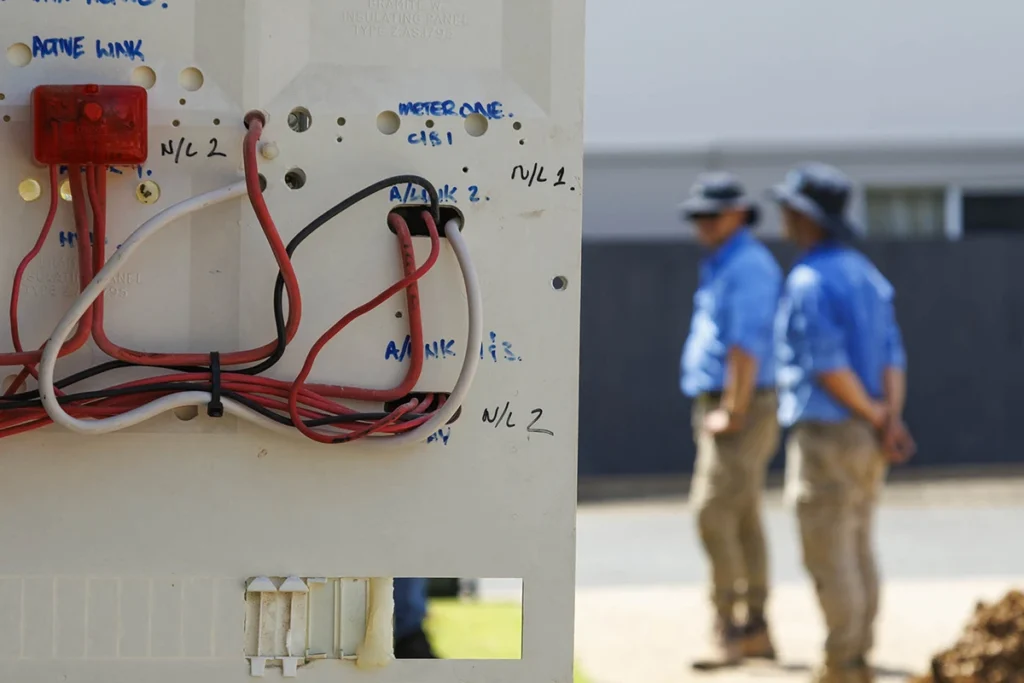
Landlords should also make sure the switchboard is clearly labelled. When a circuit trips, accurate labels help an electrician identify the affected area without wasting time working through the entire property.
Tenants can carry out the recommended test button checks where appropriate, but should report any switch that does not operate as expected. If you are unsure how to perform the test safely, ask the property manager or a licensed electrician for guidance.
Power boards and overloaded circuits
Power boards are useful when a room does not have enough outlets, but they do not increase the amount of electricity a circuit can safely supply. Connecting several boards together or running extension leads beneath rugs can create problems, particularly when high-powered appliances are involved.
Think about what is plugged in during a typical summer afternoon. A portable heater may be running in one room, while a kettle, microwave or other appliance is drawing power elsewhere. Add damaged cords or an unsuitable power board to the mix and the risk increases.
A few simple habits make a difference:
- Plug high-powered appliances directly into suitable wall outlets rather than sharing a power board with several other devices.
- Avoid connecting one power board to another.
- Keep cords away from rugs, furniture edges and places where they can be damaged.
- Stop using any cord or plug that is cracked, scorched or unusually warm.
- Use power boards with suitable overload protection, and replace damaged equipment rather than attempting a repair yourself.
For more on the everyday mistakes that overload outlets, see our guide to common electrical socket misuses that could put your home at risk.
If a power point feels hot, produces a buzzing sound or shows signs of discolouration, stop using it and report the problem. A licensed electrician can determine whether the issue lies with the outlet, the appliance or the circuit.
Give an ageing switchboard a closer look
Older Queensland homes, including character properties around Paddington and West End, can have switchboards that were installed long before modern safety features became common.
You might find old-style rewirable fuses, unclear circuit labels or an installation that needs an electrical safety assessment. Age alone does not mean a switchboard is unsafe, but it is a good reason to check whether the installation remains suitable for the property’s current electrical demands.
Pay attention to warning signs such as:
- Scorch marks or discolouration around the switchboard.
- Buzzing, crackling or a burning smell.
- Switches or breakers that feel unusually warm.
- Circuit breakers that repeatedly trip.
- Rust, damaged covers or visible wiring.
These problems should be assessed by a licensed electrician. Do not remove the switchboard cover or attempt to repair its internal components yourself. If a breaker keeps tripping, there is usually a reason for it, and repeatedly resetting it will not fix the underlying fault.
For landlords, arranging an inspection before summer can also help identify whether an older installation needs repairs or an upgrade before demand on the electrical system increases.
Check how air conditioners are powered
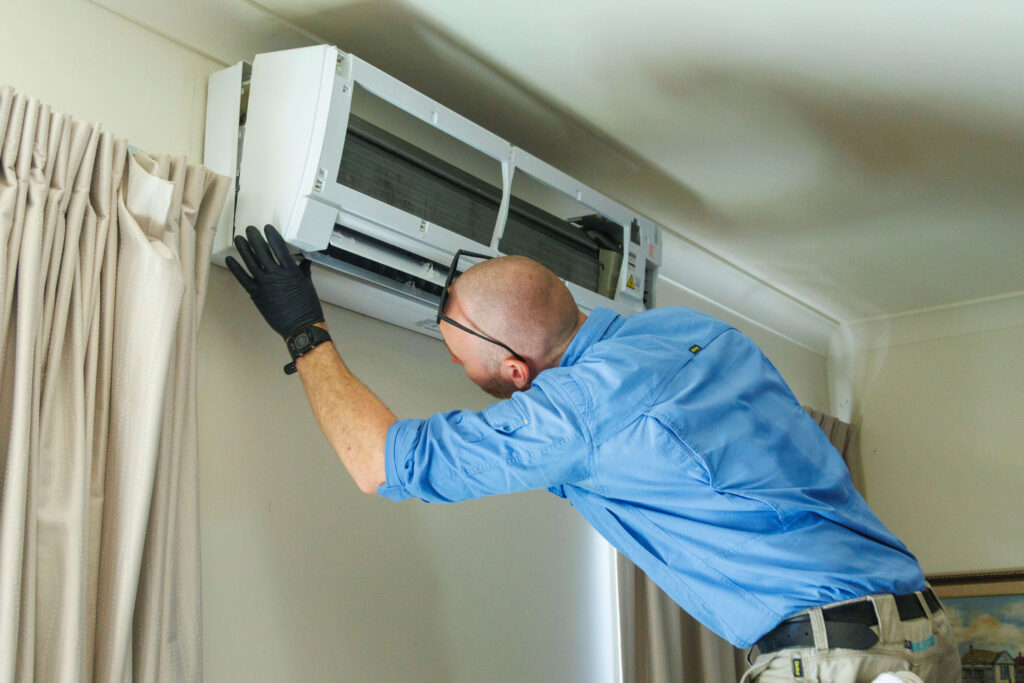
Air conditioners do a lot of work during a Brisbane summer. A split system may run for much of the day during a heatwave, so its electrical supply deserves a closer look before the weather heats up.
Some lights may briefly dim when a compressor starts, but persistent flickering, repeated tripping or unusual noises should not be ignored. If the air conditioner repeatedly trips a safety switch or circuit breaker, have it checked rather than continuing to restart it.
An air conditioner should be connected in accordance with the manufacturer’s instructions and the requirements of the electrical installation. Depending on the unit and its power requirements, a dedicated circuit may be necessary. Never run an air conditioner through an unsuitable power board or extension lead.
It is also worth arranging servicing before the summer rush. Our guide to servicing your air conditioning system covers what a service involves. A technician can check the indoor and outdoor units, while a licensed electrician can inspect electrical connections and the isolator if there are signs of a fault.
For landlords, organising these checks early is usually easier than trying to arrange several trades during the first major heatwave.
Include smoke alarms in the inspection
Smoke alarms are easy to overlook when the main focus is on switchboards and air conditioners. However, a pre-summer property inspection is a sensible opportunity to check them as well.
Confirm that the required alarms are installed, that they respond to testing and that their power supply is working as intended. Follow the manufacturer’s instructions and applicable Queensland requirements when checking or maintaining them.
Record the date of the inspection and any work completed. If an alarm fails its test, arrange the necessary attention promptly rather than leaving it until the next routine visit.
Keeping these records with the property’s maintenance documents makes it easier to show when the checks took place and whether any problems were addressed.
Keep a clear record of every fault
A useful maintenance record needs more than a note saying that the power went out. The details help an electrician understand what happened and whether the same issue has occurred before.
For each report, record the date and time, the location of the fault, what the tenant noticed and whether it has happened previously. For example, a note stating that the kitchen power point beside the sink became warm after using the kettle is more useful than simply recording that the kitchen electricity was faulty.
Photographs can help where it is safe to take them. There is no need to remove covers, touch damaged equipment or get close to a suspected electrical hazard to obtain a picture.
The record should also show when the property manager or landlord was notified, who attended the property and what action was taken.
For landlords, these notes can reveal patterns that might otherwise be missed. If the same circuit trips several times, an electrician can use the history to narrow down the cause. Tenants should keep copies of their maintenance requests too, particularly if a fault returns after a repair.
What should tenants report?
Tenants do not need to work out what is wrong with an electrical installation. Their job is to describe what they have noticed and report it promptly.
Examples worth reporting include:
- Lights that flicker repeatedly.
- A power point or switch that feels unusually warm.
- Buzzing or crackling near the switchboard.
- A safety switch or circuit breaker that keeps tripping.
- Power points that stop working unexpectedly.
- Burn marks, damaged plugs or frayed electrical cords.
Avoid using equipment that appears damaged, and do not open the switchboard or remove electrical covers.
A burning smell, visible sparks or smoke coming from a power point or switchboard requires urgent attention. Keep away from the affected area and warn others to stay clear. Call 000 if there is a fire or an immediate threat to life, and contact emergency services as appropriate. Do not put yourself at risk trying to isolate the power.
For less immediate faults that cannot wait until normal business hours, arrange an urgent assessment by a licensed electrician. Our guide to signs you need an emergency electrician in Brisbane can also help explain when a problem needs urgent attention.
Key takeaways
A few checks before summer can help landlords and property managers avoid preventable electrical problems.
- Test safety switches at the recommended interval, commonly every three months, and arrange an electrician’s assessment if one fails.
- Avoid overloading power boards and never use an unsuitable board or extension lead for an air conditioner.
- Treat warm power points, scorch marks, buzzing and repeated tripping as warning signs.
- Check that air conditioners have a suitable electrical supply and arrange servicing before the hot weather arrives.
- Keep a record of each fault, including its location, the date reported, photographs where safe and the action taken.
These checks are particularly worthwhile in older homes and properties with a history of electrical faults.
Frequently asked questions
How often should a rental property be checked for electrical faults?
There is no single inspection interval that suits every rental property. A licensed electrician’s inspection before summer can be a useful precaution, particularly for older homes or properties with a history of faults. Combine this with safety switch testing at the interval recommended by the manufacturer and any additional checks required by applicable regulations.
Is it safe to run an air conditioner from a power board?
Generally, this should be avoided. Air conditioners can draw substantial current over long periods, and an unsuitable power board or extension lead may overheat. Follow the manufacturer’s instructions and have an electrician confirm the appropriate connection for the unit.
Who should I call if a safety switch keeps tripping?
Contact a licensed electrician. Repeated tripping can indicate a faulty appliance, damaged wiring, moisture or another electrical problem. The cause needs to be identified rather than dealt with by repeatedly resetting the switch.
When should landlords arrange an electrical inspection before summer?
It is sensible to organise checks well before the hottest weeks, when tradespeople may be busier with urgent repairs. Properties with ageing switchboards, recurring electrical faults or higher power demands may need closer attention. An electrician can recommend an appropriate inspection schedule based on the installation and its condition.
Arrange an electrical check before the summer rush
If you manage a rental property in Paddington or West End, now is a practical time to review any outstanding electrical maintenance before the weather heats up.
When contacting SJK Collective, provide the property address, the approximate age of the home and details of any faults that have already been reported. This gives the team a clearer picture of whether the property may need a straightforward inspection or a more detailed assessment.
The same approach applies to older Queenslanders and newer homes in Newstead. Every property has its own electrical demands, and a check based on the actual installation is more useful than assuming all homes need the same work.
Getting onto these issues early gives landlords more time to arrange repairs, helps tenants report problems with confidence and reduces the chance of avoidable electrical trouble during the busiest part of summer.